


This is the news archive of Facts are Facts.
You can find our recent articles in the section Latest.
9/11 — Who Put Thermate in the World Trade Center?
by Christopher Bollyn
18 January 2007
Reporter Sans Frontières
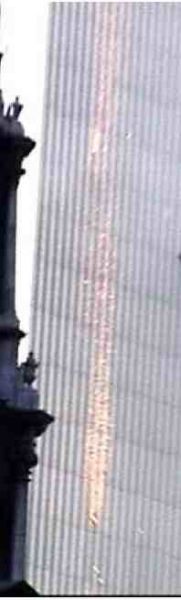 When a former worker from the World Trade Center came forward recently with crucial and verifiable information about what was really on the 81st floor of the South Tower (WTC 2), he broke up a logjam of unanswered questions about the source of the molten metal seen falling from the tower before its collapse on 9/11.
Based on this important piece of information from a former IT professional who worked with computers in the Twin Towers, I was able to determine that the two airplanes that struck the twin towers of the World Trade Center on 9/11 had directly impacted secure computer rooms in both buildings:
• the first on the 95th floor of the North Tower;
• the second on the 81st floor of the South Tower.
This information raises new questions:
• Were the computer rooms equipped to play a role in the crime?
• Were there homing devices or computers in these rooms that used precision-guidance systems to direct the planes into the towers?
• Did these computer rooms contain pre-placed explosives or forms of Thermite to destroy evidence, create an incendiary spectacle, and weaken the structure prior to the collapses?
EVIDENCE OF THERMITE
Photographic evidence strongly suggests that the secure computer rooms in both towers contained forms of Thermite, which had been pre-placed to destroy evidence and facilitate the collapse of the immense steel-frame towers while creating a deadly pyrotechnic spectacle.
After examining the photographic and physical evidence, Professor Steven E. Jones of Brigham Young University has concluded that the yellow and white glowing metal pouring from the east corner of the 81st floor of the South Tower was, most likely, molten iron created by a Thermite reaction. It could not have been molten aluminum as the federal government's Final Report on the Collapse of the World Trade Center Towers (NIST, 2005) speculates, Jones says, because, among other things, molten aluminum at that temperature would appear silver-grey in daylight conditions.
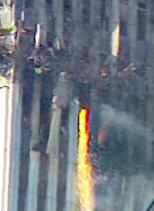 Having tested pieces of hardened molten metal from the twin towers, Jones found that they were composed primarily of iron, not structural steel. This is positive physical evidence of an aluminothermic reaction, more commonly known as Thermite, having occurred in conjunction with the collapse of the twin towers and WTC 7.
Aluminothermics refers to the intense exothermic (heat producing) reactions that occur when powdered aluminum is mixed with powdered iron oxide and/or other elements and oxides. Copper, potassium permanganate, zinc- and barium nitrate are among the additives Jones has found evidence of in the dust from the World Trade Center .
The Thermite reaction produces an extremely hot reaction (up to 2500 °C or 4500 °F), which creates molten iron and aluminum oxide. The molten iron produced from Thermite is white hot and the aluminum oxide is a white smoke.
EVIDENCE OF SULFIDATION
Thermate is a variant of Thermite that contains additives to enhance certain effects. It may contain pyrotechnic additives, such as barium nitrate, for incendiary purposes.
The addition of barium nitrate increases its thermal effect, creates flame in burning and significantly reduces the ignition temperature.
The addition of 2 percent sulfur to Thermite improves the steel-cutting properties by creating a eutectic that will melt steel at much lower temperatures.
Eutectic comes from the Greek word "eutektos," which means "easily melted." Thermate cuts through steel like "a warm knife through butter," Jones says.
The FEMA-sponsored Building Performance Study of 2002 contains evidence of melted steel caused by sulfidation and oxidation. This is found in the "Limited Metallurgical Examination" written by Professor Jonathan Barnett. The NIST report, however, fails to address the evidence of sulfidation found in the structural steel from the WTC.
Barnett examined two pieces of melted steel: one from the WTC 7, the other from the Twin Towers . About the first piece, Barnett wrote: "The thinning of the steel occurred by a high-temperature corrosion due to the combination of oxidation and sulfidation." This was done by "a eutectic mixture of iron, oxygen, and sulfur that liquefied the steel," he concluded.
Barnett found the same sulfidation in the piece of melted steel from the Twin Towers . "The severe corrosion and subsequent erosion of Samples 1 and 2 are a very unusual event," Barnett wrote. "No clear explanation for the source of the sulfur has been identified."
Professor Jones points to Thermate, with 2 percent sulfur, as being the most likely culprit. The oxidation and sulfidation of the steel requires the oxygen and sulfur being "intimately in contact with the metal at high temperature," Jones said.
VISIBLE EVIDENCE OF THERMATE
The NIST report gives no answers to this crucial question. In this respect, the NIST report is a good example of studied ignorance. Not only does NIST fail to provide any information about what was on the crucial floors of the South Tower (79, 81, and 82), but they actually suggest that these floors contained normal office materials.
"There were vigorous fires on the east side of the 80th through 83rd floors, especially on the northeast end of the 81st and 82nd floors, where the aircraft had bulldozed the office desks and chairs and added its own combustibles," the NIST report says in its "Account of WTC 2."
From the NIST report the reader gets the impression that these were normal office floors with "desks and chairs," although that was definitely not the case with the 81st floor while the contents of the 82nd and 79th floors remain unknown.
Fuji Bank was the tenant of floors 79-82, yet for some reason the NIST researchers were unable or unwilling to provide any description of the contents of these crucial floors – four years after 9/11.
A former Japanese bank employee recently came forward and explained that the 81st floor was an entire floor of server-size computer batteries:
Fuji Bank had reinforced the 81st floor, he said, so the floor could support more weight. The entire floor was then filled with server-size Uninterrupted Power Supply (UPS) batteries.
These units were bolted to a raised floor about 3 feet above the reinforced 81st floor. "The whole floor was batteries," he said, "huge battery-looking things." They were "all black" and "solid, very heavy" things that had been brought in during the night. They had been put in place during the summer prior to 9/11, he said.
But were they really batteries or were they Thermate?
"It's weird," he said. "They were never turned on."[1]
Before addressing these questions, allow me to explain how Thermate may have been used in the crash zones (this is just a speculation for those of you who often ask us to provide a scenario on what may have happened):
The perverse terrorist team that planned the destruction of the Twin Towers apparently used Hollywood expertise to create an incendiary spectacle.
They employed remote control devices and precision guidance systems to fly the planes into the towers at precisely the points where they had pre-placed explosives and Thermate incendiary bombs.
Immediately before the planes, or specially prepared drones, hit the towers, missiles carried beneath the fuselage or wing were fired into the buildings. These missiles, which apparently contained depleted uranium (DU), caused the white flashes seen before the planes hit the towers.
This white flash is evidence of a pyrophoric white-hot uranium penetrator, which bores through everything it hits and creates a super-heated space as it burns at extremely hot temperatures. Asked if a white-hot DU penetrator would set off Thermate, Jones said, "Definitely."[2]
The DU penetrator would carry on through the tower unless it were stopped by a core column or some other extremely dense object. In fact, a white-hot burning object with the characteristics of a DU penetrator is clearly seen coming out ahead of the fireball that engulfed the South Tower .
If DU missiles were used, they would have created a super-heated space in which any combustible, such as atomized jet fuel, explosives, or Thermate, would ignite immediately.
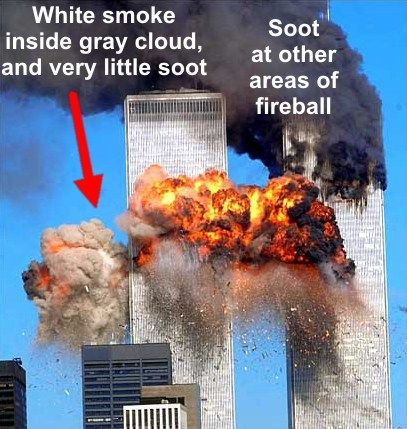
While the orange and black fireballs caused by the burning jet fuel are easily recognized in photographs, there is visible evidence of Thermate seen in the dust and smoke – the conspicuous white smoke of aluminum oxide.
THE WHITE SMOKE OF WTC 1
On the 95th floor of WTC 1, Marsh & McLennan had a "large walled data center," a secure computer room along the north and east sides of the tower. And that's exactly where the plane hit – the north wall of the 95th floor.
The plane struck the North Tower right in the middle of the north face. The nose of the plane struck the 130th perimeter column at the 96th floor slab and something, perhaps the nose landing gear, carried on right through the middle of the building and severed three columns on the south side of the tower.
An image caught on video immediately after the plane struck the tower shows a huge fireball engulfing the north face of the building where the plane hit. But from the east side of the tower a suspicious huge white dust cloud is emerging that looks like an exploding bale of cotton
It is pure white and shows no signs of burning jet fuel. This white dust is emerging from the east wall of the tower, from the level and side occupied by the computer room.
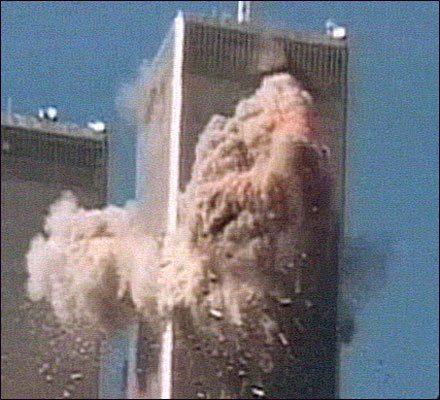
One frame from the Naudet video. You can watch the high-resolution video by renting the DVD called 9/11, the Filmmakers' Commemorative Edition
Professor Jones, when shown this photo, said, "It looks very much like aluminum oxide dust." The white smoke is clearly coming out of the east side of the building and is also seen behind the orange and sooty cloud that is rising on the north side of the tower.
It is very clear that two very different materials are exploding in the crash area: jet fuel and some form of Thermate, which is producing the telltale white smoke.
The NIST report does not mention the white smoke or dust seen coming out of the north tower and attributes these clouds to 10,000 gallons of burning fuel mixed with dust:
Atomized jet fuel is highly flammable (similar to kerosene), so both the hot debris and the numerous pieces of electrical and electronic gear in the offices were more than sufficient as ignition sources.
A surge of combusting fuel rapidly filled the floors, mixing with dust from the pulverized walls and floor slabs.
The pressure created by the heated gases forced the ignited mist out the entrance gash and blown-out windows on the east and south sides of the tower.
The resulting fireballs could be seen for miles, precipitating many 911 calls.
Isn't it odd that the explosion, which was supposedly caused by jet fuel combusting in the middle of the building, did not affect the western façade as it had the eastern?
Why did the east side of the building react so differently from the west side? And why is the smoke coming from the east side such a bright white and completely lacking any of the characteristics of burning jet fuel?
Is this where Thermate incendiary devices had been placed – in the computer room of Marsh & McLennan? If Thermate bombs had been pre-placed in the 95th floor computer room, who put them there?
Certainly Marsh & McLennan must know or have records of who had access to that room and what was in it. This information needs to be revealed.
Notice the stream of white smoke coming from one side of the North Tower , but the rest of the smoke is black.[3]
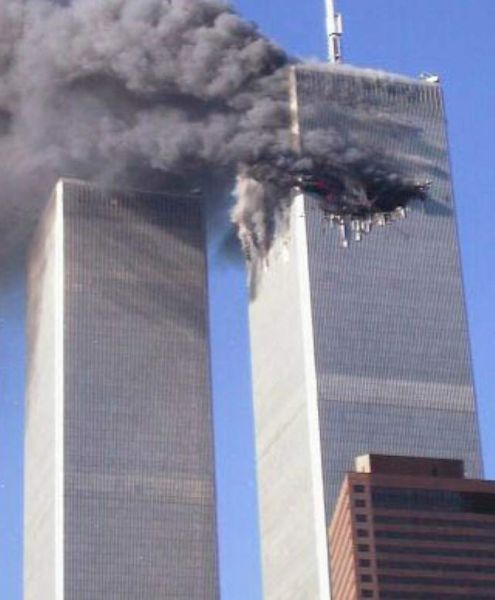
The North Tower before the South Tower has been hit by a plane.
WHITE SMOKE FROM WTC 2
The bright orange and black fireballs that erupted from the South Tower are indelibly seared in the memory of the modern world. But here again, there was a conspicuous white cloud that is not easily explained by the burning jet fuel.
Again, the NIST report points only to burning jet fuel:
Within about one half of a second, dust and debris flew out of windows on the east and north faces.
Several small fireballs of atomized jet fuel burst from windows on the east face of the 81st and 82nd floors, coalescing into a single, large fireball that spanned the entire face.
A tenth of a second later, fire appeared in the dust clouds ejected from the south face of the 79th, 81st, and 82nd floors.
Photo below: The plane entered at the left side of this picture and exited along the right side.
As with all photos that show this fireball at the South Tower , the cloud of smoke that shot out of the entrance hole is mostly gray and white, with very little soot.
"The fireballs burned for 10 seconds, extending almost 200 feet out from the north, east, and south faces," NIST reports. "Having consumed the aerosol fuel, the flames then receded."
From the south face of WTC 2, the "dust clouds" that emerged look nothing like combusting jet fuel. They look much more like the white smoke of Thermate than burning kerosene.
The massive aircraft and its estimated 9,100 gallons of fuel hit the south face of the South Tower at 540 mph and carried on through the east and north sides. But what is exploding out of the south side of the tower a fraction of a second later?
The huge whitish cloud of dust that comes from the south face has orange flame within it but has none of the dark orange and black colors seen in the jet fuel fireballs that emerged from the north and east sides of the tower.
This white dust lacks any visible evidence of burning kerosene but was expelled from the tower at least 250 feet. What was the force pushing it out if no jet fuel is seen in it or behind it?
As one looks up at the three fireballs emerging from the explosion that occurred at the crash level of the South Tower , it is clear to see, from the color of the flame and soot, that the jet fuel is primarily in the front of the fireball. The further one looks to the rear, toward the point of entry, the less evidence one sees of burning kerosene.
When the South Tower begins to collapse, huge amounts of white smoke are pushed from the tower. Furthermore, prior to every documented flow of molten metal, NIST observed puffs of dust. The photographic and physical evidence proves that Thermate was used in the destruction of the towers and strongly suggests that it had been pre-placed on the floors that the planes hit.
If Arab terrorists did not pre-position Thermate in the secure computer rooms and throughout the Twin Towers and WTC 7, who did?
Finding what was on these crucial floors and who had access to these floors and secure computer rooms will help identify the real culprits of 9/11.
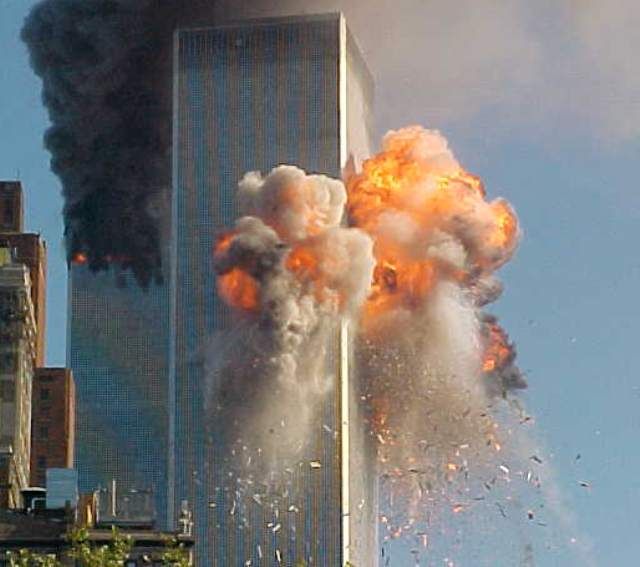
The plane entered the South Tower from this side of this building. There is not much soot in a fireball at the entrance hole.
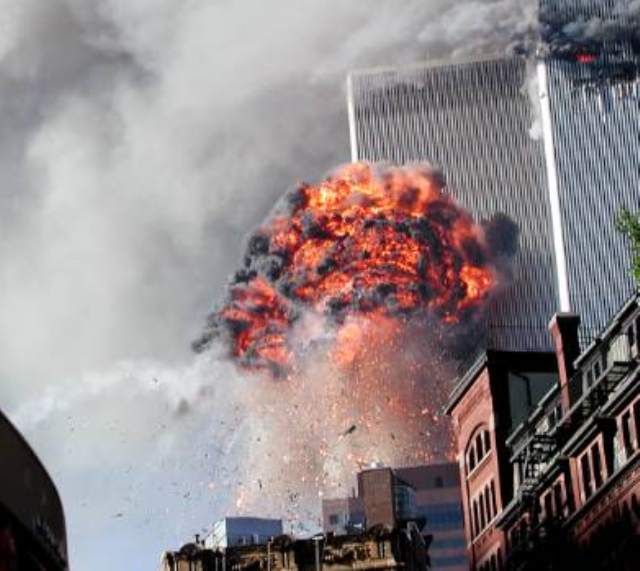
This shows the exit hole where some plane parts flew out. This fireball looks more like a sooty, hydrocarbon fire.
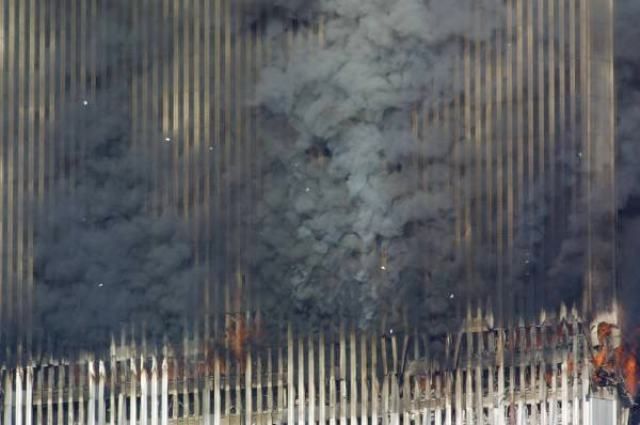
The South Tower. The plane entered at the left, and exited at the right. A stream of white smoke is mixing with the black smoke. What could create that white smoke?
Important : None of the "truth seekers" -- not even the American Free Press newspaper -- will promote Christopher Bollyn's work.
Bollyn's provides these articles for free, so he depends entirely upon donations for financial support.
Please support Bollyn's research. Click here.
Sources
- [1] See: http://www.iamthewitness.com/Bollyn-Fuji-WTC.html
- [2] More about the uranium possibility here: Bollyn-DU-Missiles.html
- [3] These images can be found at: http://www.rengel.net/wtc_images/index.php